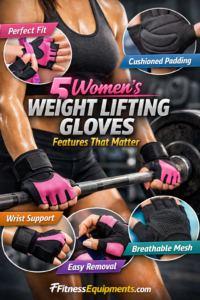
Picture this: you’re halfway through a set of deadlifts. Your form is locked in, your legs feel strong, everything is working — and then your grip gives out. Not because your muscles failed. Because your hands did.
Sound familiar? It’s one of the most frustrating moments in any training session. You know you had more in you. Your hands just didn’t cooperate.
That’s exactly why weight lifting gloves for women have become a staple in gym bags everywhere. Whether you’re grinding through heavy deadlifts, knocking out pull-ups, or working through a high-rep dumbbell circuit, the right pair of gloves can be the difference between a great workout and one that gets cut short.
Here’s what most people miss though: not all lifting gloves are created equal. And not all gloves marketed to women actually fit the way women’s hands are shaped. There’s a lot of noise out there — too many options, too many vague descriptions, too much “best of” content that doesn’t actually explain why.
That’s what this guide is here to fix. You’ll find a clear breakdown of what features actually matter, what’s just marketing fluff, five women’s lifting gloves that consistently earn strong reviews, and everything you need to make a confident choice.
Ready? Let’s get into it.
Why Weight Lifting Gloves for Women Actually Matter
The case for gym gloves for women goes well beyond aesthetics or personal preference. There are concrete, practical reasons why so many women who train seriously reach for a pair before hitting the floor.
Grip support. As weights get heavier, grip becomes a real limiting factor. Women’s lifting gloves — especially those with textured or rubberized palm grip — help maintain a secure hold on the bar so your back, legs, or shoulders can do the work they’re actually supposed to do. You shouldn’t be cutting a set short because your fingers slipped.
Callus reduction. Calluses are a completely normal part of lifting. They’re not dangerous, and plenty of women wear them like a badge of honor. But if keeping your hands smoother matters to you — and there’s nothing wrong with that — workout gloves for women create a protective layer that reduces friction and slows the buildup over time.
Wrist stability. Many weightlifting gloves for women include an integrated wrist wrap. This isn’t just for powerlifters or women moving serious weight. Even moderate loads can stress the wrist joint in overhead movements, rows, or heavy pressing. A glove with wrist support can help you train more consistently and avoid that nagging ache that builds up over weeks of repetitive loading.
Hygiene. Gym equipment carries bacteria. That’s just reality. A barrier between your hands and shared bars or handles is a minor detail, but it’s a real one.
What often gets overlooked is that the right pair of gloves can actually build confidence under the bar. When your grip feels secure and your hands feel protected, you tend to push a little harder. You reach for the next weight up instead of second-guessing yourself. That psychological edge matters more than most people give it credit for.
What to Look for in Women’s Lifting Gloves
Not every feature matters for every person, and buying based on marketing claims alone is how you end up with gloves that sit unused in your gym bag. Here’s a breakdown of what to actually evaluate when choosing weight lifting gloves for women.
Fit and Sizing
This is where a lot of women run into problems. Gloves marketed as “women’s” sometimes just mean scaled-down versions of men’s gloves — and they don’t account for the actual shape of women’s hands, which typically have narrower palms, longer fingers relative to palm width, and different thumb positioning.
Look for brands that provide a sizing chart based on actual hand measurements rather than generic S/M/L labels. A glove that bunches at the fingertips or gaps across the palm is going to cause more problems than it solves. It’ll shift mid-set, create pressure points, and generally get in the way.
The ideal fit is snug but never restrictive. You want full range of motion through your fingers — especially for movements like cable rows, barbell curls, or pull-ups where grip adjustments happen naturally mid-set.
Padding and Grip
Padding in gym gloves for women comes down to placement and thickness — and both involve a tradeoff worth thinking about.
Thicker palm padding protects against pressure from bars and dumbbells. This is especially helpful for high-rep work where the bar digs into the same spot repeatedly over a long session. If your palms tend to get sore quickly, more padding is worth prioritizing.
That said, too much padding can reduce feel — that tactile awareness of exactly how the bar is sitting in your hand. Many experienced lifters prefer minimal padding for exactly this reason. There’s no wrong answer here. It depends on your training style and what bothers you more: pressure discomfort or reduced sensitivity.
Grip texture is often a bigger factor than padding thickness. Rubberized dots, silicone grip strips, and woven grip fabric all help maintain contact with the bar without over-gripping. Less gripping effort means less forearm fatigue and more sustained performance through a long session.
Wrist Support
Weightlifting gloves for women with integrated wrist wraps are worth serious consideration if your training includes overhead pressing, heavy dumbbell work, or any Olympic-style movements.
A firm wrist wrap limits hyperextension and keeps the joint properly aligned under load. Look for wraps with adjustable Velcro closures — they let you dial in the tightness based on what you’re training that day. A moderate cinch for accessory work, a firmer lock for heavy pressing.
If your training is primarily lighter weights or cardio-based lifting — kettlebells, HIIT circuits, lighter dumbbell work — a simple glove without wrap support is probably all you need. No point adding bulk you won’t use.
Material and Breathability
Genuine leather gloves last longer and mold to your hand shape over time. They’re the classic choice for lifters who train daily and want something built to hold up for years.
Synthetic materials — neoprene, microfiber, mesh-back designs — are typically lighter, more breathable, and easier to wash. They’re also more affordable. For most women training in a standard gym environment, a quality synthetic glove is the practical, convenient choice.
If you run hot or sweat heavily during training, an open-back mesh design makes a meaningful difference. Sweaty hands in sealed gloves gets uncomfortable fast and can actually reduce grip rather than improve it.
5 Best Weight Lifting Gloves for Women
Here are five women’s lifting gloves that consistently earn strong reviews across fit, function, and durability — covering a range of training styles and budgets.
1. Harbinger Women’s Pro Gloves – Best Overall
Harbinger has been manufacturing lifting gloves for decades, and the women’s pro line reflects that experience. These gym gloves for women feature a leather palm for durability, an open-back mesh design that keeps airflow moving, and a terry cloth thumb patch for wiping sweat mid-workout — a small detail that turns out to matter a lot when you’re three sets deep.
Fit runs true to size, with multiple size options that make it easier to find a genuine match. The wrist closure is secure without adding bulk that gets in the way.
Commonly reported by users: these gloves hold up well over extended use, which makes the slightly higher price point a sensible investment compared to replacing cheaper gloves every few months.
Best for: General strength training, barbell and dumbbell work, intermediate to advanced lifters.
2. RDX Women’s Gym Gloves – Best for Heavy Lifting
RDX builds equipment oriented toward performance under real load, and their women’s line follows through on that. Maya Hide leather — a high-quality synthetic that performs comparably to genuine leather — covers the palm, and the integrated wrist wrap provides solid support for heavy pressing and pulling movements.
A frequent note from users: these gloves tend to run slightly small. Sizing up is worth considering if you’re between sizes or have wider palms.
Best for: Deadlifts, bench press, heavy rows, and compound barbell movements where grip under load is the priority.
3. Trideer Half-Finger Gloves – Best Minimalist Option
For women who want hand protection without bulk, the Trideer half-finger cut is a strong choice. Fingertips stay free for better tactile feel and natural grip adjustments, while the palm area — where pressure is actually greatest during lifting — stays protected.
These workout gloves for women are lightweight, machine washable, and available in a wide range of sizes. The anti-slip silicone print across the palm provides reliable grip without adding significant padding that reduces feel.
Best for: Lighter lifting, HIIT sessions, kettlebell work, or anyone new to gloves who wants to start minimal before committing to something bulkier.
4. Fit Active Women’s Lifting Gloves with Wrist Support – Best for Wrist Support
The extended wrist wrap on this pair is the standout feature. It provides firm support for overhead movements, reduces accumulated wrist fatigue during longer sessions, and is adjustable enough to accommodate different wrist sizes without feeling sloppy or over-engineered.
Padding is moderate — enough to reduce pressure during pulling movements without sacrificing the feel of the bar. The Velcro closure holds up consistently over repeated use, which is a common failure point in cheaper options.
Best for: Overhead pressing, women managing wrist discomfort or looking to prevent it, heavier compound movements where joint stability is a priority.
5. SIMARI Women’s Workout Gloves – Best Budget Pick
At the lower price point, SIMARI gloves offer more than the cost would suggest. Full palm coverage, a flexible mesh back for ventilation, and an adjustable wrist strap cover the fundamentals cleanly.
These aren’t built for heavy daily use long-term — that’s a realistic expectation to set. But for someone just starting out, testing whether gloves actually suit their training, or looking for a backup pair, they’re a completely practical option.
Best for: Beginners, occasional gym-goers, and budget-conscious shoppers who want to try gloves without a significant upfront investment.
Gloves vs. Straps: What’s the Difference and When Does It Matter?
Gym gloves and lifting straps often get mentioned in the same breath, but they serve meaningfully different purposes. Knowing which to reach for saves a lot of frustration.
Lifting straps wrap around your wrist and the bar itself, allowing you to hold loads that exceed your grip capacity. They’re primarily used for heavy pulling movements — deadlifts, barbell rows, rack pulls — where the goal is to remove grip as the limiting factor entirely so you can focus on the target muscle group.
Weight lifting gloves for women protect your hands, improve grip comfort, and in wrap-equipped versions, support the wrist joint. They don’t substitute for grip strength the way straps do. They’re a better all-purpose training tool for mixed workout sessions.
A practical approach that many women settle on: use gloves for the majority of training, and keep straps available specifically for your heaviest pulling sets. That way, your hands are protected across a full session while you can still load up on the movements that demand it.
Do You Actually Need Lifting Gloves?
Here’s the reality: no, you don’t need weight lifting gloves for women. Many strong, serious women train entirely bare-handed and prefer it. Gloves are not a requirement.
But they solve real, documented problems for a lot of people — and there’s no good reason to avoid them if those problems are ones you recognize.
What rarely gets discussed is the training duration benefit. When grip fatigue and hand discomfort aren’t factors you’re managing, it’s easier to complete your sets and stay focused on the muscles you’re actually targeting. That’s a legitimate performance benefit, even if it sounds simple.
There’s also the consistency angle. Putting on your gloves before training is a small ritual — a signal to your brain that it’s time to focus. Many women report that small habits like this support consistency over time. And consistency is where results actually come from.
The common argument against gloves is grip strength development. Bare-hand training does build grip strength more directly because there’s no assist from glove material or padding. If grip strength is a specific goal for you — climbing, competitive powerlifting, or general athletic performance — it’s worth thinking about how much you rely on gloves versus incorporating some bare-hand work as well.
It doesn’t have to be one or the other. Most women find a balance that fits their training.
Common Mistakes When Buying Women’s Lifting Gloves
A few missteps come up again and again when women are shopping for gym gloves. Worth knowing before you buy.
Buying based on appearance alone. Color and design are completely valid things to care about — you’re more likely to use gear you actually like the look of. But don’t let aesthetics override the fit and function criteria. A glove that looks great and fits poorly isn’t going to help anyone.
Ignoring the sizing chart. A common mistake is treating glove sizes like apparel sizes — assuming that if you’re a medium in everything else, you’ll be a medium in gloves. Hand proportions vary enough that it’s always worth measuring and comparing to the brand’s actual chart.
Choosing maximum padding automatically. More padding feels protective, but it can actually create problems in movements that require feedback through the bar. Thinner padding with good grip texture is often the smarter choice for most training.
Not trying them for a few workouts before judging them. Gloves, like most training equipment, take a few sessions to break in. A pair that feels slightly stiff or awkward at first often settles into a much more comfortable fit after a few uses.
Caring for Your Women’s Lifting Gloves
A quality pair of workout gloves for women can last a year or more with basic maintenance. A neglected pair can fall apart in a few months. The difference mostly comes down to a few consistent habits.
- Air them out after every session. Don’t leave gloves sealed in your gym bag. Moisture is the main cause of material breakdown and the fastest route to persistent odor.
- Wash them regularly. Most synthetic gloves can go through a machine wash on a gentle cycle — check the label first. Leather gloves should be hand washed with mild soap and left to air dry completely.
- Handle the Velcro carefully. Opening the wrist strap roughly and yanking it apart half-closed is one of the most common ways closures wear out ahead of schedule. Open fully, close fully, every time.
- Let them dry before storing. Every single time. This one simple step makes the biggest difference in longevity.
Small habits, but they add up to a meaningful difference in how long your gloves hold up.
Building Gloves Into Your Training Routine
Gear only helps if it actually gets used. That sounds obvious, but it’s worth saying directly.
A common pattern: women buy weight lifting gloves, wear them a couple of times, forget them in a bag somewhere, and wonder later why their hands still hurt or why their grip is still failing. The gloves weren’t the problem. The habit wasn’t there.
A simple fix: keep your gloves clipped to the outside of your gym bag or sitting on top of your workout clothes when you’re getting ready. Visibility is more reliable than willpower for habit-building. If you see them, you’ll grab them.
It also helps to attach the habit to a specific moment in your routine — putting gloves on right after your warm-up, for example. That anchor, repeated enough times, becomes automatic. You stop thinking about it and just do it.
Consistent training over months is what actually produces results. Weight lifting gloves for women are a small tool that makes that consistency more comfortable and sustainable. Use them long enough that they become part of the routine, not an afterthought.
Final Thoughts
Choosing the right weight lifting gloves for women comes down to understanding what you actually need from them — grip support, hand protection, wrist stability, or some combination of all three.
The five options covered above span a range of training styles and budgets. If you’re not sure where to start, the Harbinger Women’s Pro Gloves offer the most well-rounded combination of durability, fit, and functionality for most training scenarios. From there, your specific goals and any problem areas in your current training can guide you toward something more specialized.
And if you’ve been training without gloves and getting along just fine? There’s no pressure to change what’s working. But if your grip has been failing mid-set, your hands are taking more of a beating than you’d like, or you just want more confidence and security under the bar — women’s lifting gloves are a straightforward, affordable solution.
You’re already putting in the work. The right gear just makes it a little more comfortable to keep showing up.
Reference
Powerlifting Technique — The 10 Best Women’s Workout Gloves to Prevent Calluses


