Let’s be honest for a second.
That treadmill you’re eyeing? The one that promises to transform your living room into a personal gym and finally make you a “morning workout person”?
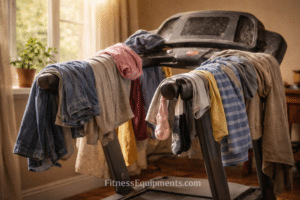
It might end up as the world’s most expensive clothing rack.
I’m not saying this to crush your fitness dreams. I’m saying it because someone should’ve warned me before I bought mine. And nobody did.
Treadmill fails are more common than the fitness industry wants you to believe. Not the funny viral video kind where someone flies off the back (though we’ll get there). The real kind—the slow, frustrating, expensive kind that makes you wonder why you bothered in the first place.
This article covers the treadmill problems nobody talks about. The shortcomings. The hidden costs. The reasons that shiny new machine might collect dust within six months.
But here’s the thing: I’m not anti-treadmill. Some people genuinely love them. Some people use them daily for years. This isn’t about convincing you to skip the purchase entirely.
It’s about going in with your eyes open.
Ready? Let’s talk about what could go wrong.
Why Most Treadmill Purchases End in Disappointment
Here’s a statistic that should make you pause: studies suggest that around 40% of home exercise equipment ends up unused within the first year.
Treadmills lead that category.
Why? Because there’s a massive gap between how we imagine owning a treadmill and the reality of actually using one. In our heads, we see ourselves jogging effortlessly while watching Netflix, finally hitting our fitness goals without leaving the house.
In reality? The treadmill disadvantages start piling up quickly.
The machine is louder than expected. The workouts feel boring. The space it occupies feels suffocating. The maintenance costs surprise us. And slowly, day by day, we use it less and less.
Understanding these treadmill fails before you buy can save you thousands of dollars and a whole lot of frustration.
Let’s break them down.
The 10 Most Common Treadmill Fails
1. The Boredom Problem Is Real
Let’s start with the elephant in the room.
Running in place is boring. There, I said it.
Yes, you can watch TV. Yes, you can listen to podcasts. Yes, you can create the perfect playlist. But none of that changes the fundamental reality: you’re staring at the same wall, in the same room, running to nowhere.
Why this treadmill fail matters:
Outdoor running offers constantly changing scenery—trees, people, weather, unexpected detours. Your brain stays engaged because there’s always something new to process.
On a treadmill? Your brain checks out. And when your brain checks out, motivation follows.
This isn’t a willpower problem. It’s a design problem. Treadmills ask you to do something fundamentally unnatural: move your body while going nowhere. Your brain knows the difference, even if you try to trick it.
The honest truth: If you’re someone who thrives on variety and stimulation, this treadmill shortcoming might be a dealbreaker. No amount of Netflix will fix it.
2. Your Muscles Don’t Work As Hard
Here’s something most salespeople won’t mention.
When you run outside, you propel your body forward. Your calves push off. Your hamstrings engage. Your glutes fire. Every stride requires effort from your entire posterior chain.
On a treadmill? The belt does some of that work for you.
The moving surface pulls your legs backward, reducing the activation needed from your calves and hamstrings. You’re still exercising, but you’re not getting the same full-body engagement as outdoor running.
What this means practically:
- Runners who train exclusively on treadmills often struggle when transitioning to outdoor races
- Muscle imbalances can develop over time
- You may burn fewer calories than the machine’s display suggests
This treadmill fail doesn’t mean treadmills are useless. But if you’re training for a race or trying to build lower-body strength, you should know the limitations.
3. The “Realistic Terrain” Lie
Treadmill marketing loves to brag about incline settings. “Simulate hills! Train like you’re outdoors!”
Here’s what they don’t tell you: it’s not the same. Not even close.
Outdoor terrain varies constantly. Uphill. Downhill. Slight curves. Uneven surfaces. Soft grass. Hard pavement. Your body adapts in real-time, engaging stabilizer muscles and challenging your balance.
Treadmills offer… a smooth, predictable surface with adjustable angles.
Why this treadmill problem matters:
Your body is incredibly good at adapting. When it knows exactly what’s coming—same surface, same incline, same speed—it becomes efficient. And efficient means fewer calories burned, less muscle engagement, and plateaued results.
Outdoor runners deal with terrain that’s constantly surprising their bodies. That unpredictability forces more muscle activation and prevents adaptation plateaus.
This treadmill fail is particularly frustrating for people who bought their machine specifically to train for outdoor events. The skills don’t transfer as well as you’d hope.
4. Space: The Silent Dealbreaker
Quick question: Have you actually measured where you plan to put this thing?
Treadmills are massive. We’re talking roughly 6-7 feet long and 3 feet wide—and that’s just the machine itself. You also need clearance behind it (safety regulations recommend 6 feet), space on the sides, and room for the console area.
Suddenly, that “spare corner” doesn’t seem so spare.
Real-life treadmill fails from this issue:
- Machines crammed into spaces where they barely fit, making workouts feel claustrophobic
- Treadmills blocking pathways, creating daily annoyance
- Resale nightmares when you realize you can’t get the thing back out of your basement
- Folding treadmills that technically fold but weigh 200+ pounds
The question nobody asks: Where will this thing actually live in your home? And will you want to spend time in that space?
If you’re in an apartment or small house, this treadmill shortcoming might be the most practical reason to reconsider.
5. The Noise Factor
“This model is whisper quiet!”
No. No, it isn’t.
Even the best treadmills generate noise—motor hum, belt friction, footfall impact. At walking speed, it might be tolerable. But crank up the intensity? Add some incline? Now we’re talking serious decibels.
Who this affects:
- Apartment dwellers with downstairs neighbors
- Parents with sleeping babies
- Anyone who planned to exercise during early morning or late night hours
- Shared household members trying to watch TV in the next room
This treadmill fail has ended more exercise routines than people admit. You start with good intentions—6 AM workouts before the day gets busy. Then the complaints start. Then you start skipping workouts to avoid conflict. Then the treadmill becomes a clothing rack.
Sound familiar? You’re not alone.
6. Injury Risk Is Higher Than You Think
“But treadmills are safer than running outside! No cars! No uneven sidewalks!”
True. But treadmills come with their own injury risks—ones that are surprisingly common.
The most frequent treadmill fails related to injury:
Missteps and falls: The belt doesn’t stop when you do. A moment of distraction—looking at your phone, turning to talk to someone—can result in a fall. And falling on a moving surface is worse than falling on solid ground.
Handrail dependency: Many users grip the handrails for balance. This seems safe, but it actually throws off your natural gait, causing strain on your back, neck, and shoulders over time.
Overstriding: Because the belt moves underneath you, many runners develop a tendency to overstride—landing with their foot too far in front of their body. This increases impact on knees and hips.
Repetitive stress: The perfectly consistent surface means your joints absorb identical stress with every single step. No variation. No relief. Just the same impact, thousands of times per workout.
This treadmill problem is especially relevant for beginners, older adults, or anyone recovering from previous injuries. The machine that seems “safer” might actually cause new problems.
7. The Hidden Cost of Maintenance
Here’s what the price tag doesn’t show you.
Average treadmill maintenance costs over 5 years:
- Belt replacement: $200-$500
- Motor repairs: $200-$400
- Electronics/console issues: $150-$300
- Annual lubrication and tune-ups: $100-$150/year
- Emergency repairs when something breaks mid-workout: $$$
Add it up. That $1,000 treadmill might cost you another $1,000-$2,000 over its lifetime just to keep it running.
Why this treadmill fail catches people off guard:
We’re conditioned to think of exercise equipment as “buy it once” purchases. But treadmills are machines—complex ones with motors, electronics, and moving parts. They break down. They wear out. They require care.
And if you don’t maintain them? The belt starts slipping. The motor strains. The problems compound until you’re facing a major repair bill or a dead machine.
For budget-conscious buyers, this treadmill shortcoming often proves to be the final straw.
8. Posture Problems Sneak Up On You
Watch someone run on a treadmill. Really watch them.
Chances are, they’re doing one or more of these things:
- Leaning forward at an unnatural angle
- Gripping the handrails
- Looking down at the console
- Shortening their stride to feel “safer”
None of these happen during outdoor running. They’re treadmill-specific habits—and they’re terrible for your body.
What happens over time:
- Forward lean strains the lower back
- Handrail gripping causes shoulder and neck tension
- Looking down compresses the cervical spine
- Shortened strides lead to hip flexor tightness
The sneaky part of this treadmill fail:
These problems develop gradually. You don’t wake up one day with back pain and think, “Oh, it must be my treadmill posture.” You assume you slept wrong. Or you’re getting older. Or it’s just stress.
Meanwhile, those daily treadmill sessions are slowly creating dysfunction.
The fix requires conscious effort: no handrails, eyes forward, natural stride. But most people never even realize there’s a problem until the damage is done.
9. The Calorie Burn Plateau
In the beginning, treadmill workouts feel effective. You’re sweating. You’re tired. The calorie counter shows impressive numbers.
Fast forward three months.
Same workout. Same settings. But somehow… it feels easier? And despite your consistency, the scale isn’t budging?
Welcome to adaptation—one of the most frustrating treadmill problems for people trying to lose weight.
Why this happens:
Your body is survival-oriented. When it encounters repeated stress, it becomes more efficient at handling that stress. Same speed, same incline, same duration = same demand = adaptation = fewer calories burned per session.
The plateau trap:
- Week 1: 30 minutes at 5 mph burns ~300 calories
- Week 12: 30 minutes at 5 mph burns ~250 calories (your body got efficient)
- Week 24: Same workout feels easy and burns even less
The outdoor advantage:
Variable terrain, wind resistance, temperature changes, and natural pace fluctuations constantly challenge your body in new ways. Adaptation is harder to achieve.
This treadmill fail is particularly discouraging for people who bought their machine specifically for weight loss. The tool that worked initially stops working—and they don’t understand why.
10. Mental Burnout Is a Real Thing
Let’s talk about the psychological side of treadmill fails.
Running in place, staring at the same wall, day after day, week after week… it wears on you. Not physically. Mentally.
Signs of treadmill-induced mental burnout:
- Dreading workouts you used to enjoy
- Constantly checking the timer, wishing it would go faster
- Feeling exhausted before you even start
- Making excuses to skip “just today”
- Associating that room with obligation rather than energy
Why this matters more than you think:
Fitness is a long-term game. The best exercise isn’t the most effective one—it’s the one you’ll actually do consistently. If your treadmill makes you miserable, consistency becomes impossible.
This treadmill shortcoming is often the final nail in the coffin. Not a dramatic injury. Not a mechanical failure. Just… slow, creeping resentment that eventually wins.
Outdoor running offers fresh air, changing seasons, social interaction, and mental stimulation. Treadmills offer… a belt and a screen.
For many people, that’s simply not enough.
So… Should You Still Buy a Treadmill?
After all that negativity, you might expect me to say “absolutely not.”
But that’s not quite right either.
Treadmills might work for you if:
- You live somewhere with extreme weather (brutal winters, dangerous summers)
- Safety concerns prevent outdoor exercise (high-crime areas, no sidewalks)
- You have health conditions requiring controlled environments
- You genuinely enjoy running in place (some people do!)
- You’ll combine treadmill sessions with other activities
Treadmills probably won’t work for you if:
- You’re easily bored and need variety
- You have limited space
- You’re on a tight budget (including long-term maintenance)
- You live in shared housing with noise concerns
- You’ve tried treadmills before and quit
The honest middle ground:
Some people love their treadmills. They use them daily for years. They have no regrets.
But they’re the minority. And fitness marketing doesn’t want you to know that.
Alternatives Worth Considering
Before you commit, consider what else that $500-$2,000 could buy:
Outdoor running gear: Quality shoes, weather-appropriate clothing, and a hydration pack cost a fraction of treadmill prices—and outdoor running is free forever.
Gym membership: Many gyms cost $30-$50/month. That’s years of access to multiple machines, classes, and variety for the price of one treadmill.
Stationary bikes or rowers: Lower injury risk, often quieter, smaller footprint, and similar cardiovascular benefits.
Walking: Seriously. Regular walking provides massive health benefits without any equipment, any cost, or any treadmill fails to worry about.
Making Peace With Your Decision
Maybe you’ve read all this and you’re still buying one. That’s okay.
Maybe you already own one and now you’re feeling guilty. That’s okay too.
The goal here isn’t to shame anyone. It’s to provide information that’s usually hidden behind marketing fluff and optimistic salespeople.
If you do buy a treadmill:
- Measure your space before purchasing
- Budget for maintenance costs from day one
- Start with shorter sessions to prevent burnout
- Focus on proper form—no handrails, no leaning
- Combine with outdoor walks or other activities
- Give yourself permission to sell it if it doesn’t work out
If you already own one that’s collecting dust:
You’re not a failure. You fell for the same marketing millions of others did.
Sell it. Donate it. Repurpose the space. And try something else.
Fitness isn’t about forcing yourself to use equipment you hate. It’s about finding movement that feels sustainable. Sometimes that takes trial and error.
Final Thoughts: Eyes Wide Open
Treadmill fails happen every single day in homes across the world.
Not because people are lazy. Not because they lack willpower. But because treadmills have genuine limitations that rarely get discussed before the purchase.
Now you know them.
You know about the boredom. The reduced muscle engagement. The space demands. The noise. The injury risks. The maintenance costs. The posture problems. The calorie plateaus. The mental burnout.
You can still choose to buy one. But now it’s an informed choice.
And informed choices—even when they don’t work out perfectly—are always better than hopeful ones made in the dark.
Whatever you decide, keep moving. That’s what actually matters.


