BOSU Ball Exercises for Core Muscular Endurance
Introduction
BOSU Ball Exercises for Core training are designed to improve your ability to maintain stability, posture, and control over extended periods of time. Core muscular endurance is not about producing maximum force once—it is about sustaining proper engagement while the body is moving, breathing, and resisting fatigue.
When endurance is lacking, the core stops doing its job and other areas, especially the lower back and hips, begin compensating. This often leads to inefficient movement and increased injury risk. BOSU Ball Exercises for Core endurance address this problem by combining controlled instability with time-under-tension, forcing the core muscles to stay active throughout each exercise.
Core Muscular Endurance Explained
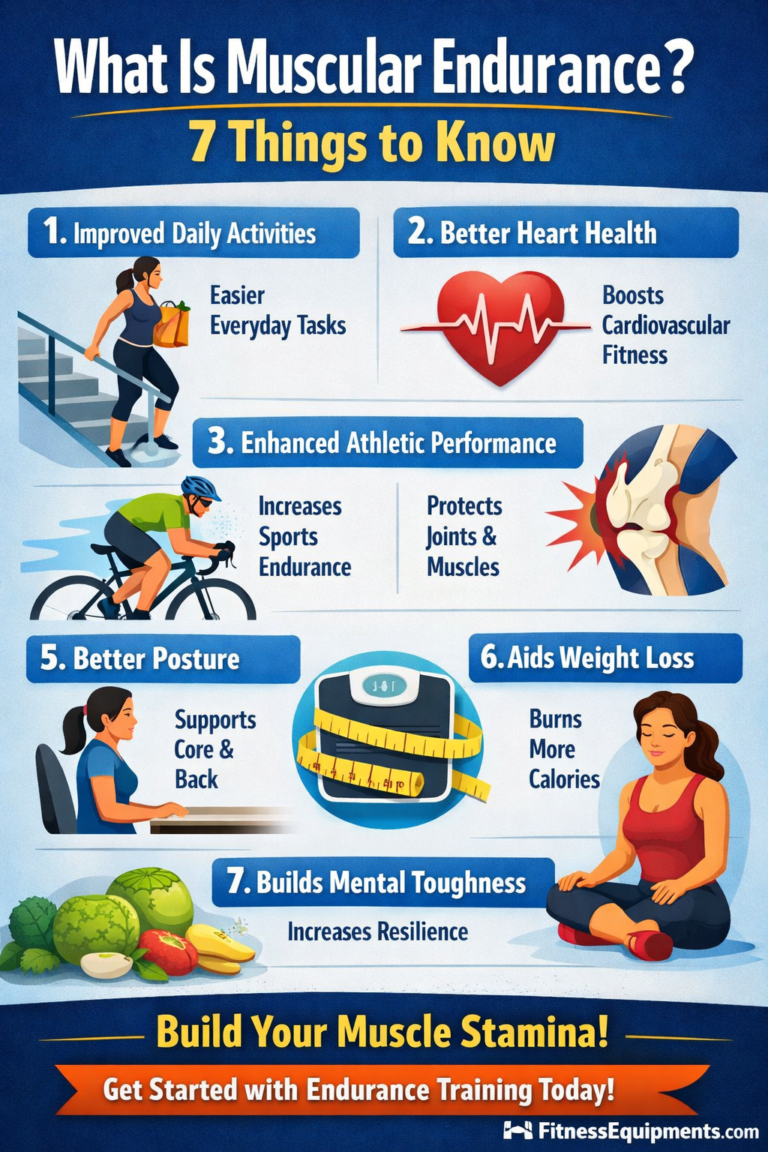
Core muscular endurance refers to the ability of the trunk muscles to remain engaged for long durations without losing alignment or control. These muscles include the rectus abdominis, transverse abdominis, internal and external obliques, spinal erectors, and the deep stabilizers of the hips and pelvis.
Core strength allows you to generate force briefly, such as during a heavy lift. Core endurance allows you to maintain posture, balance, and spinal integrity during repeated efforts or prolonged activity. This quality is essential for running, cycling, lifting multiple sets, manual labor, and everyday tasks that require sustained upright positioning.
Endurance-based core training also improves the body’s ability to resist unwanted movement. Anti-extension, anti-rotation, and anti-lateral flexion capabilities help protect the spine when fatigue sets in.
Why Use a BOSU Ball for Core Endurance
BOSU Ball Exercises for Core endurance are effective because the unstable surface demands continuous muscular adjustment. Even static positions require constant engagement from deep stabilizers to keep the body aligned.
Unlike heavy resistance training, BOSU-based endurance work allows you to increase muscular demand without excessive spinal loading. This makes it suitable for longer holds, higher total volume, and frequent practice. The BOSU ball also provides immediate feedback—loss of control is noticeable, making it easier to self-correct form.
Safety, Setup, and Technique Basics
- Place the BOSU ball on a flat, non-slip surface.
- Use the dome side up for all BOSU Ball Exercises for Core endurance in this guide.
- Maintain a neutral spine with ribs stacked over the pelvis.
- Brace the core lightly; avoid holding your breath.
- Move slowly and stop sets when alignment breaks down.
Mild muscular fatigue is expected. Sharp pain, joint discomfort, or loss of spinal control are signs to stop and regress the exercise.
7 BOSU Ball Exercises for Core Muscular Endurance
1. BOSU Forearm Plank
Purpose: Develops anti-extension endurance and full-core bracing.
Setup: Place forearms on the BOSU dome, elbows under shoulders. Extend legs back and lightly squeeze the glutes.
Execution: Maintain a straight line from head to heels while breathing steadily. Press forearms down into the BOSU to increase engagement.
Endurance target: 20–60 seconds.
2. BOSU High Plank Hold
Purpose: Improves shoulder-to-core stability under sustained load.
Setup: Hands on the BOSU dome, arms extended, feet hip-width apart.
Execution: Keep hips level and ribs down while actively pushing the BOSU away. Avoid rocking side to side.
Endurance target: 20–45 seconds.
3. BOSU Dead Bug
Purpose: Builds endurance while resisting spinal extension.
Setup: Lie on your back and press hands or feet lightly into the BOSU to create tension.
Execution: Slowly extend opposite arm and leg while keeping the lower back stable against the floor.
Endurance target: 8–12 controlled reps per side.
4. BOSU Seated Balance Hold
Purpose: Trains upright postural endurance and deep stabilizers.
Setup: Sit tall on the BOSU dome with knees bent.
Execution: Maintain a vertical torso. Progress by lightly lifting one or both feet while staying controlled.
Endurance target: 45–75 seconds.
5. BOSU Mountain Climbers (Controlled)
Purpose: Adds endurance under movement while reinforcing trunk stability.
Setup: High plank position with hands on the BOSU dome.
Execution: Alternate knees toward the chest slowly, keeping hips level and torso quiet.
Endurance target: 30–45 seconds.
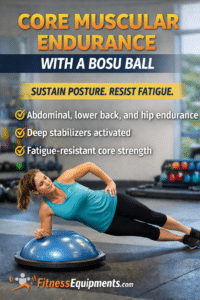
6. BOSU Side Plank
Purpose: Builds lateral core endurance and pelvic control.
Setup: Forearm on the BOSU dome, feet stacked or staggered.
Execution: Lift hips and hold a straight line from head to feet without rotating.
Endurance target: 25–60 seconds per side.
7. BOSU Bird Dog Hold
Purpose: Reinforces posterior chain endurance and cross-body stability.
Setup: One hand and opposite knee on the BOSU dome.
Execution: Extend the free arm and leg while maintaining balance and neutral alignment.
Endurance target: 20–40 seconds per side.
Programming for Muscular Endurance
BOSU Ball Exercises for Core endurance should prioritize time under tension. Static holds of 30–60 seconds combined with slow, controlled dynamic movements produce the best results.
Use circuits of three to five exercises with short rest periods (30–45 seconds). Two to four total rounds are sufficient depending on experience level and overall training volume.
Progressions and Regressions
Regress exercises by shortening hold times, increasing base of support, or reducing movement complexity. Progress BOSU Ball Exercises for Core endurance by increasing total hold time before adding instability or movement.
Form and breathing should remain consistent at all times. If alignment fails, reduce difficulty rather than pushing through fatigue.
Integration With Broader Training Goals
BOSU Ball Exercises for Core endurance fit well at the end of strength sessions, on cardio-focused days, or as standalone stability work. Consistent moderate-volume training is more effective than infrequent high-fatigue sessions.
Conclusion
BOSU Ball Exercises for Core muscular endurance build a stable, resilient foundation that supports long-duration activity and efficient movement. By focusing on controlled instability, sustained engagement, and proper alignment, these exercises improve the core’s ability to perform under fatigue and protect the spine over time.