You know exactly how this story goes. Someone buys a treadmill in January, uses it religiously for three weeks, and by March it is a very expensive place to hang laundry. Or a set of adjustable dumbbells arrives, gets used twice, and migrates to the corner of the guest room where it quietly gathers dust until someone stubs a toe on it in the dark. This is not a discipline problem and it is not a motivation problem. It is a buying problem — specifically, the problem of choosing home fitness equipment based on who you want to be rather than how you actually live. This article is about breaking that pattern so that the next piece of home fitness equipment you buy is one you actually use, consistently, for years.
The Real Reason Home Fitness Equipment Goes Unused
The fitness industry is built on aspiration. Every product photo shows a lean, focused person in perfect lighting getting results. Every description promises transformation. And so people buy accordingly — they buy the equipment that matches the version of themselves they are committed to becoming, rather than the version of themselves who comes home tired on a Tuesday evening and has forty minutes before dinner needs to be made.
These two people have very different needs from their home fitness equipment. The aspirational version wants a full power rack, a commercial treadmill, and a cable machine. The real version needs something that requires no setup, no warmup ritual, no dedicated headspace, and no negotiation with the rest of the household for space. When the equipment you buy serves the aspirational version and the real version has to live with it, the equipment loses. Every time.
According to the CDC’s physical activity guidelines for adults, only about one in four American adults meets the recommended weekly activity levels. That gap is not explained by a lack of available equipment — it is explained largely by a mismatch between intention and sustainable habit. The best home fitness equipment in the world does not fix that mismatch. Only buying for your actual behavior patterns does.
The Questions Nobody Asks Before Buying Home Fitness Equipment
Most buying guides for home fitness equipment ask what your fitness goals are. That is the wrong starting point. Goals are aspirational by nature and they lead you straight back into the trap. The better questions are behavioral ones — questions about what you have actually done in the past, not what you intend to do in the future.
How many minutes do you realistically have on a typical weekday, not your best day? If the answer is twenty to thirty minutes, your equipment needs to deliver a complete session in that window with no setup time. A barbell and squat rack setup that takes ten minutes to configure before you lift a single weight is already consuming a third of your available time before you have done anything.
Where in your home will the equipment actually live? Not where you imagine it could go if you rearranged things — where it will realistically be placed tomorrow. Home fitness equipment that lives in a dedicated room you have to walk to is fundamentally different from equipment that lives in the living room or bedroom where you already spend time. Proximity is one of the most underrated factors in whether home fitness equipment gets used.
Do you prefer to exercise alone or do you need some form of social engagement or accountability to stay consistent? This question matters more than almost any feature comparison. Someone who thrives with external accountability but buys a purely standalone piece of equipment will struggle in a way that someone who loves solitary training never will — and vice versa.
What type of movement have you consistently done in the past, even informally? If you have always enjoyed walking, running, or cycling outdoors, a cardio-based piece of home fitness equipment has a much higher chance of being used than a strength training setup, regardless of what a fitness influencer says about the superiority of resistance training. Equipment that builds on existing movement preferences gets used. Equipment that requires you to build an entirely new relationship with movement from scratch rarely does.
Matching Home Fitness Equipment to How You Actually Behave
If Your Time Is Fragmented and Unpredictable
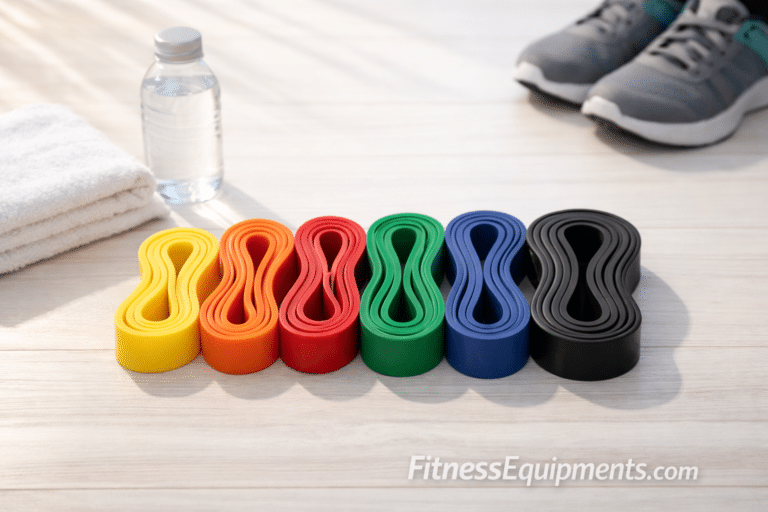
Fragmented schedules are the most common pattern among people whose home fitness equipment ends up unused. The solution is not to try harder to protect time for workouts — it is to buy home fitness equipment that works in fragments. Resistance bands, adjustable dumbbells, a pull-up bar, a kettlebell or two — these are not inferior options for people who cannot commit to long sessions. They are the right options. A single kettlebell used for fifteen minutes three times a week delivers far better results than a multi-station home gym that gets used twice a month because a full session requires an hour you consistently cannot find.
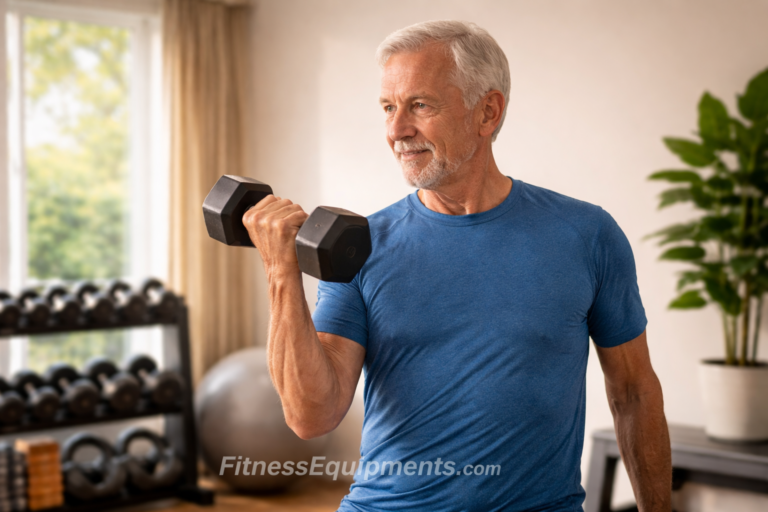
Adjustable dumbbells deserve particular attention here. They replace an entire rack of fixed weights in the footprint of a single pair, they require zero setup, and they can be used for virtually any strength exercise. For anyone with a busy, variable schedule, a quality set of adjustable dumbbells is consistently among the most-used pieces of home fitness equipment — precisely because the barrier to using them is almost zero.
If Space Is a Genuine Constraint
Space constraints lead people to buy compact home fitness equipment that they then place in inconvenient locations — under a bed, in a closet, behind a door — where it is never immediately accessible. If your home fitness equipment is not visible and reachable without any retrieval effort, it will not get used as often as it should. The goal for space-constrained buyers is not just compact equipment — it is equipment that can live somewhere you actually are.
Foldable equipment has improved significantly and now includes genuinely capable options for both cardio and strength training. A foldable rowing machine, for example, stores nearly vertically against a wall and can be pulled out and ready to use in under a minute. A folding weight bench combined with adjustable dumbbells gives full upper and lower body training capability in a space smaller than a dining chair. If you are buying home fitness equipment for a small home or apartment, prioritize storage position over storage size — equipment that stores upright against a wall is almost always more accessible than equipment that stores flat under furniture.
If You Need Accountability and Engagement to Stay Consistent
Connected home fitness equipment — machines and platforms that offer live or on-demand classes, leaderboards, and community features — exists precisely for this behavioral type. Peloton built an entire category around the insight that many people do not lack equipment or space; they lack the social and competitive dynamic that keeps them coming back. If your history shows that you exercise consistently in group fitness classes or with a workout partner but struggle alone, connected home fitness equipment is not a luxury upgrade — it is addressing a genuine behavioral need.
The subscription cost that comes with most connected platforms is worth evaluating honestly. If you would otherwise pay for a gym membership and the connected equipment replaces that reliably, the math often works out. If you are buying connected home fitness equipment on top of a gym membership you are keeping, you are probably buying for aspiration again rather than behavior.
If You Have Used Cardio Equipment Consistently Before
People who have a genuine history with cardio — who have owned or regularly used a treadmill, stationary bike, or elliptical and actually used it consistently — are good candidates for investing in quality cardio home fitness equipment. The key word is history. If you used a treadmill consistently at a gym for two years, a home treadmill is very likely to be used. If you have never maintained a cardio habit but are convinced this time will be different, the odds are working against you regardless of what you buy.
For genuine cardio exercisers, quality matters significantly more than for other equipment types. A cheap treadmill that is noisy, has a short belt, and maxes out at 10mph will be abandoned faster than a quality one because the experience of using it is unpleasant. In cardio equipment specifically, buying the best you can reasonably afford — and not the entry-level version — pays off in consistent use over time.
If You Are Building a Complete Home Gym
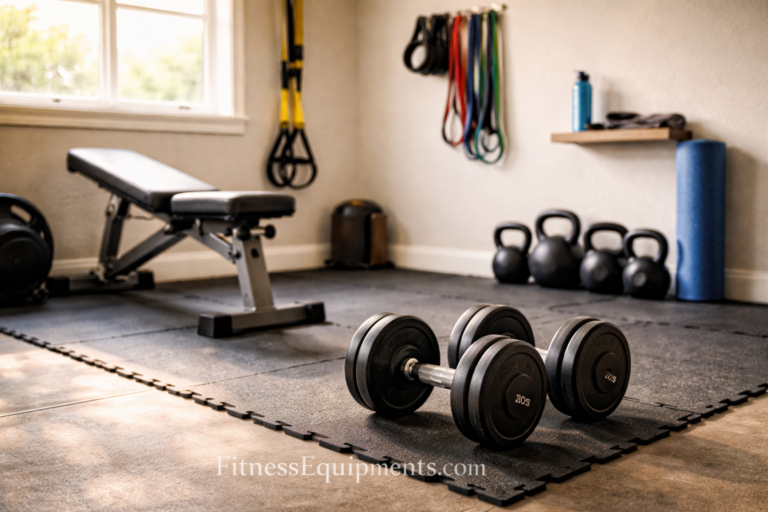
For serious builders of a full home gym setup, the temptation is to replicate a commercial gym at home. This almost always leads to over-buying and underusing. A power rack, barbell, and a set of plates covers the vast majority of compound strength movements and will be used consistently. Adding a quality adjustable bench, a pull-up bar mounted to the rack, and a set of resistance bands rounds out the setup to near-complete functionality. Everything beyond this should be added only after you have demonstrated consistent use of what you have — not purchased upfront in a burst of enthusiasm.
The Setup Problem Nobody Talks About
One of the most consistent predictors of whether home fitness equipment gets used is how much friction exists between the decision to work out and the first rep. Every minute of setup time, every piece of equipment that needs to be moved to access another, every adjustment that requires a tool — these frictions compound into a barrier that is easy to skip when motivation is anything less than peak. And motivation is almost never peak on a random Tuesday.
Before buying any piece of home fitness equipment, run through the full mental simulation of using it on a low-motivation day. Not on your best day — your worst typical day. If getting from couch to first rep takes more than five minutes with no special effort, that equipment is at risk. If it requires clearing a space, assembling components, or navigating past other furniture, that risk increases significantly. The best home fitness equipment for your life is the equipment that the tired, distracted, low-motivation version of you will actually use.
Spending the Right Amount for Your Actual Usage Pattern
The home fitness equipment market spans an enormous price range, from under fifty dollars to tens of thousands. A common mistake is spending at the high end based on aspiration — reasoning that a more expensive piece of equipment will be more motivating to use. In practice, price has almost no relationship with usage consistency. Behavior does. A fifty-dollar set of resistance bands used four times a week delivers infinitely better results than a two-thousand-dollar smart bike used twice a month.
A more useful spending framework is to match investment level to demonstrated behavior. If you are buying home fitness equipment for the first time or returning after a long break, start with inexpensive, versatile equipment that matches your behavioral profile. Use it consistently for three to six months. If you are still using it and want more capability, that track record justifies a larger investment in something more capable. This approach does not make for exciting buying decisions, but it produces home fitness equipment setups that actually get used — which is the only outcome that matters.
Buy for the Person You Are, Not the Person You Plan to Be
Every piece of home fitness equipment collecting dust in a spare room represents a gap between aspiration and behavior. Closing that gap does not require more discipline or a better attitude about fitness. It requires buying home fitness equipment that is matched to how you actually live — your real schedule, your real space, your real motivation patterns, and your real history with exercise. The equipment that wins is not the most impressive or the most feature-rich. It is the equipment with the lowest barrier to use, sitting in a place you already are, ready to deliver a complete session in the time you actually have. That is the standard. Everything else is just a well-intentioned clothes rack waiting to happen.